
Using generative AI tools is pretty cool because they can help improve your writing or you can use them to make images, videos, and even custom music about anything you can think of in any style you want. But then APA, MLA, and Chicago citation styles* showed up with a bunch of rules and guidelines to follow.
*fun-ruiners
The good news? We have an automated AI citation generator below, and provide more background information and examples for citing AI in APA, MLA, and Chicago.
Bookmark this page for quick reference: press Ctrl+D (Windows) or Cmd+D (Mac).
AI Citation Generator
Pick the citation style, add info, copy and paste itReference
Parenthetical citation
Narrative citation
Copy the link to a citation style to share with your learners.
- APA: honorlock.com/blog/how-to-cite-ai/#apa
- MLA: honorlock.com/blog/how-to-cite-ai/#mla
- Chicago: honorlock.com/blog/how-to-cite-ai/#chicago
Share links to specific sections with your learners
- APA: honorlock.com/blog/how-to-cite-ai/#apa
- MLA: honorlock.com/blog/how-to-cite-ai/#mla
- Chicago: honorlock.com/blog/how-to-cite-ai/#chicago
- AI citation generator: honorlock.com/blog/how-to-cite-ai/#ai-citation-generator
How to cite AI in APA
APA AI citation format examples
Reference list entry
- Template: AI Company Name. (year, month day). Title of chat in italics [Description, such as Generative AI chat]. Tool Name/Model. URL of the chat
- Example: OpenAI. (2026, June 11). Did Cleopatra leave Caesar on read? [Generative AI chat]. ChatGPT. https://chatgpt.com/c/yourlinkurl
In-text citations
- Parenthetical citation: (Author, Year) (OpenAI, 2026)
- Narrative citation: Author (Year) OpenAI (2026)
AI company name: This refers to the company owns the AI tool, not the name of the tool itself:
- OpenAI owns ChatGPT
- Anthropic owns Claude
- Google owns Gemini
- xAI owns Grok
- Perplexity AI owns Perplexity
Date: The year, month and date of the version you used.
Title of the chat: Usually automatically created by the tool unless you changed it.
Tool name/Model: The name of the model (e.g. ChatGPT, Claude, Grok, Gemini, etc.)
Bracketed text: Describe the type of AI model. We used "Generative AI chat" in the example above, but you could also use Large Language Model or something similar. If it's an AI tool that creates images or videos, use "AI image generator" or "AI video generator"
Source: Use a link that takes readers directly to the chat, or tool if no specific link is available.
Here are important points to know about APA policy guidelines for citing AI-generated content.
How does APA define AI?
APA defines AI as generative LLM tools, but it doesn’t include other forms of AI tools, such as grammar checkers, citation tools, or plagiarism detectors.
What to do if you cite AI in an APA publication
If you cite AI in an APA publication, you need to:
- Cite it using the software citation format
- Disclose it in the Methods section
- Upload the full output of the AI in an appendix or as supplemental material, including the prompts you used
You can use AI for editing, but you need to disclose how it was used.
AI can’t be listed as an author on research papers
According to APA guidelines, AI tools like ChatGPT and Gemini can’t be listed as authors because they don’t meet authorship criteria since they can’t take responsibility for the work or consent to its publication.
Author responsibility
Authors are entirely responsible for verifying the accuracy of all AI-generated content, which includes text and any citations it provides.
How to cite AI generated images and videos in APA
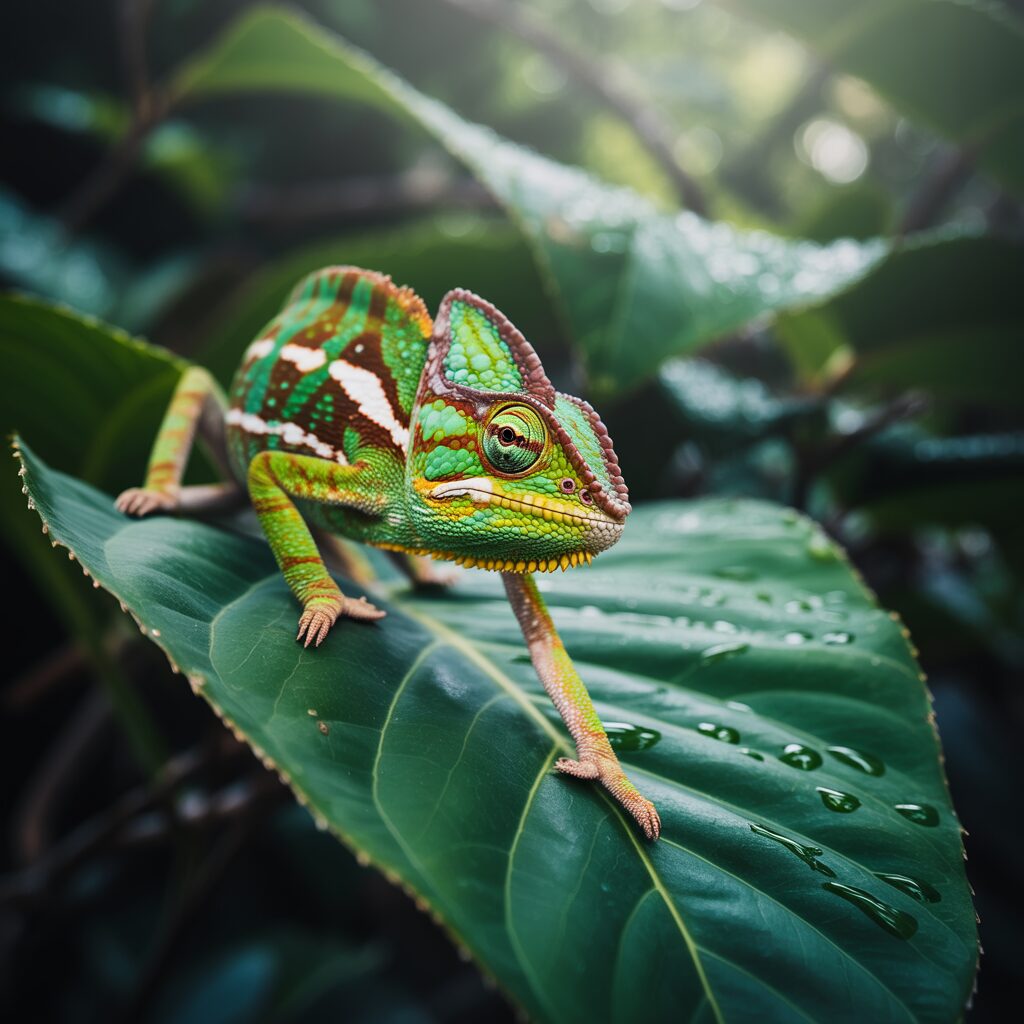
APA hasn’t published specific guidelines for citing AI-generated images or videos, but you can cite them in a format similar to the examples below.
Example APA citations for AI images:
- Reference: Krea. (2025). Krea (Idealogram 3.0) [AI image generator]. https://www.krea.ai/image
- In-text citations: Krea (2025) or (Krea, 2025)
- Add a note that’s similar to the one under this AI-generated image of a chameleon.
Example APA citations for AI videos
- Reference: OpenAI. (2025). ChatGPT (Sora) [AI video generator]. https://sora.chatgpt.com/
- In-text citations: Open AI (2025) or (Open AI, 2025)
ebook: How to Prevent Chatbot Cheating
6-part ebook with everything you need to know about chatbots and how to control if, how, and when they’re used in online learning.
How to cite AI in MLA
MLA formatting AI examples
How to cite AI-generated text in MLA
Works cited MLA AI citation
- Template: “Prompt text” prompt. Title of Container, Day Month version, Publisher, Day Month Year, location.
- Example: “Explain how Edgar Allan Poe used alliteration in his writing” prompt. ChatGPT, 14 May version, OpenAI, 20 May 2025, https://chatgpt.com/.
MLA AI in-text citation example:
- (“Explain how Edgar Allan Poe used alliteration in his writing”)
- Prompt text (Title of Source): Add the prompt you used or briefly describe what the AI tool generated.
- Title of Container: The name of the AI tool (e.g., ChatGPT, Claude, etc.)
- Version: Include the AI tool version and the release date, if it's available.
- Publisher: Company that made the AI tool (e.g., OpenAI, Anthropic, etc.)
- Date: The date the content was generated
- Location: URL for the AI tool.
Here are a few key points to know about citing generative AI in MLA:
How does MLA define AI?
MLA defines generative AI as a tool that can as a tool that analyzes and/or summarizes content from a set of information available on the internet (e.g., web pages, books, and other writing), and uses that information to generate original content.
Be transparent about how you use generative AI in your work
Always cite when and how you use generative AI tools, whether it's paraphrasing, quoting, translating, or generating content like text, images, video, and even code or data.
However, if you use an AI tool to find a source, just cite the source itself; you don’t need to cite that you used the AI tool specifically to find that source or that you found it through the tool. For example, if Google Gemini directs you to a research study that you use in your work, you’d only cite the research study, not Google Gemini.
Do not treat the AI tool as an author
MLA guidelines are clear that AI can’t be listed as authors.
Author responsibility
Similar to APA guidelines, MLA indicates that it’s up to the author(s) to verify any AI-generated content used in their work.
How to cite AI-generated images in MLA
AI-generated images require a caption that includes a description of the prompt along with the AI tool, version, and date the image was created.
The text below the image of the napping golden retriever shows how to cite an image generated with ChatGPT’s image generation tool, DALLE-3.
DALL-E lets users create a shareable link. If you use a shareable link, include that specific URL instead of the general site link.

How to cite AI in Chicago Style
Citing AI in Chicago style is less rigid than APA and MLA. Chicago says to cite AI content in a note, not in the bibliography because the chat can’t be shared like a source. But some AI tools offer shareable links, so this rule MIGHT change.
Example AI citations in Chicago
In most cases, you can simply acknowledge the AI tool in your text (e.g., “The list of tropical fish was generated by ChatGPT”).
However, if you need a more formal citation for a research paper, for example, you’d add a numbered footnote or endnote like this: Text generated by Claude, Anthropic, June 11, 2026, https://claude.ai/.
If you’ve edited the AI-generated text, just mention it at the end of the note, like this: Text generated by Claude, Anthropic, June 11, 2026, https://claude.ai/. Edited for style and content.
Detecting and preventing AI cheating
If you have concerns about chatbot cheating, you aren’t alone. While AI detectors and plagiarism checkers tools won’t really help because they’re ineffective when AI-generated text is edited, remote proctoring software can detect and block AI tools during exams and written assignments.