Is Your Campus Using These? Practical Tips to Reduce Energy Costs
May 1, 2026
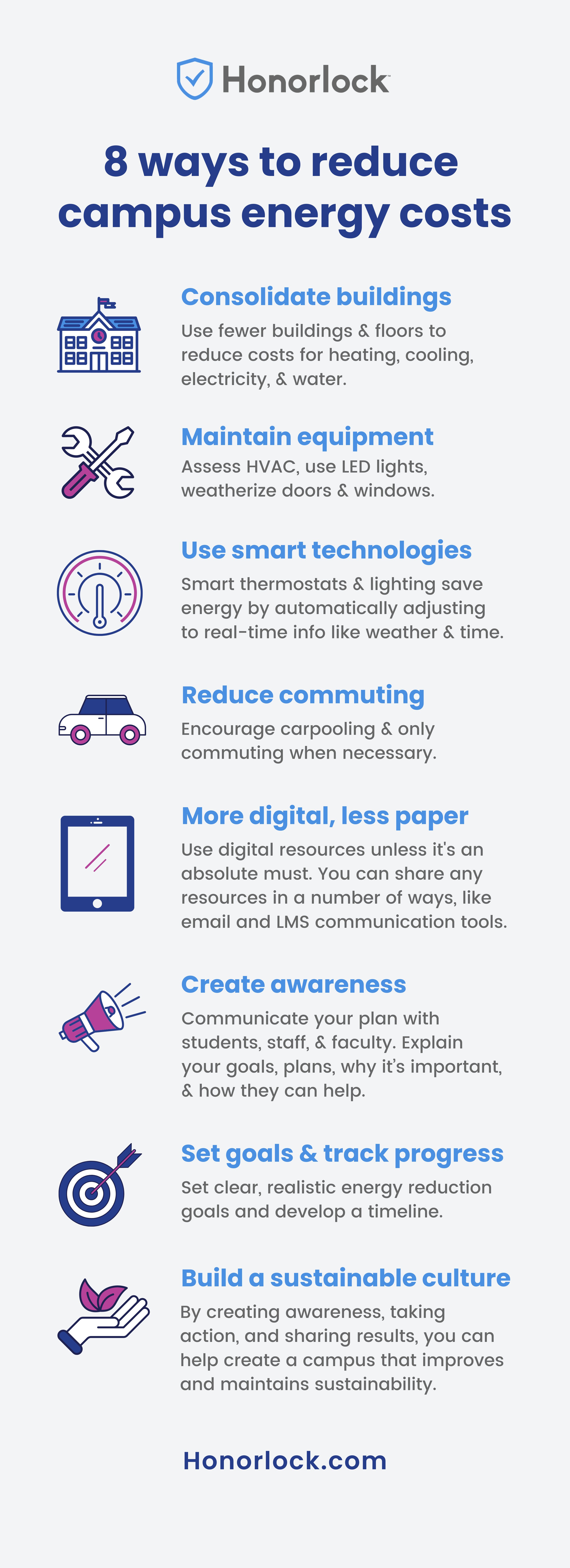
Reducing campus energy costs starts with using existing space and equipment more efficiently. Schools can consolidate underused buildings and floors so fewer spaces need heating, cooling, electricity, and water. Regular HVAC assessments, LED lighting, and weatherized doors and windows can also reduce waste, especially in older buildings where small inefficiencies add up over time.
Colleges and universities can also reduce costs by changing daily habits and using smarter systems. Smart thermostats and lighting can adjust based on weather, schedules, and occupancy, which helps avoid unnecessary energy use.
Schools can encourage carpooling, reduce paper use with digital resources, and use online proctoring to reduce the need for students to travel to campus for exams. They can also communicate energy goals with students and staff and track progress over time so sustainability becomes part of campus operations.
Get more resources to improve teaching and learning
×
NEW Honorlock Interview Integrity - Blocks AI Fraud